Stock Out
Suggested Products
Stock Out


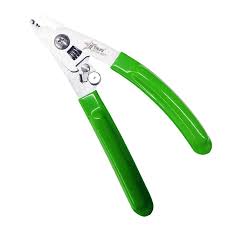
A high-precision fiber optic stripping tool crafted from hardened steel for durability and consistent performance. Designed to cleanly remove cable jackets, buffer coatings, and acrylate layers from optical fibers without nicking or damaging the delicate 125µm glass core. The FIBER STRIPPER STEEL is an essential precision tool for fiber optic technicians, installers, and network engineers. Unlike standard wire strippers, this tool is specifically engineered to handle the delicate layers of fiber optic cables—removing the rugged outer jacket, the tight buffer, and the fine acrylate coating—all while ensuring the fragile 125µm glass cladding remains completely nick and scratch-free.
Crafted from high-carbon tool steel and hardened to 58–60 HRC, this stripper maintains its sharp edge even after thousands of cycles. The precision-ground blades ensure clean cuts on Kevlar strength members and plastic jackets without crushing the internal fiber. It features a three-hole sequential stripping process:
Designed for field use, these strippers feature spring-loaded handles that return to the open position automatically, reducing hand fatigue during large splicing jobs. The ergonomic grips provide non-slip comfort, while the integrated safety lock keeps the tool closed for safe storage. Some models integrate aramid yarn (Kevlar) cutting scissors directly into the handle for all-in-one versatility. To ensure longevity, keep stripping notches clean by wiping blades with 99% isopropyl alcohol and compressed air; the tool comes factory pre-set and calibrated.
Have question about this product? Get specific details about this product from expert.
There are no questions asked yet. Be the first one to ask a question.
Stock Out