Stock Out
Suggested Products
Stock Out


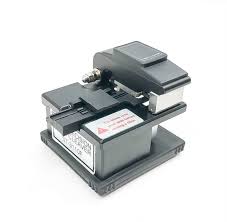
A high-precision fiber optic cleaver designed to deliver smooth, perpendicular end faces on glass optical fibers. Essential for low-loss fusion splicing, a good quality cleaver ensures a mirror-like surface with a typical cleave angle of less than 0.5°, featuring durable blades and ergonomic operation for both field and lab use. A Fiber Cleaver is arguably the most critical hand tool for a fiber optic technician. While a fiber stripper removes the coating, the cleaver is responsible for scoring and snapping the thin (125µm) glass fiber to create a perfectly flat, mirror-like end face. For a fusion splicer to create a low-loss connection (often less than 0.02dB), the cleaver must provide an end face angle as close to 90 degrees as possible.
Good quality cleavers utilize a diamond or tungsten carbide blade with a specific hardness rating to score the glass without crushing it. The mechanism typically involves clamping the stripped fiber under tension, scoring it with a sharp blade, and applying a bending force to create a clean break. High-end models ensure a cleave angle of less than 0.5°, which is the industry standard for maintaining signal integrity in high-speed networks. Blade longevity is a major differentiator; entry-level professional cleavers feature blades rated for 48,000 cleaves, while premium models can last for 60,000 to 200,000 cleaves. Quality cleavers also feature an Auto-Rotation multi-position blade turret (12-16 positions) that automatically rotates after each cleave.
A "Good Quality" cleaver handles various fiber types without constant recalibration via Universal Clamps (accepting 250µm, 900µm, 3mm pigtails, and flat drop cables) and One-Step Operation. Scrap management via built-in trash bins collects glass shards safely. Using a dull cleaver results in bad cleaves (chipped edges or hackles) causing high signal loss. Maintenance involves cleaning regularly with a dry brush or compressed air, inspecting the blade, and storing it properly in its protective case.
Have question about this product? Get specific details about this product from expert.
There are no questions asked yet. Be the first one to ask a question.
Stock Out